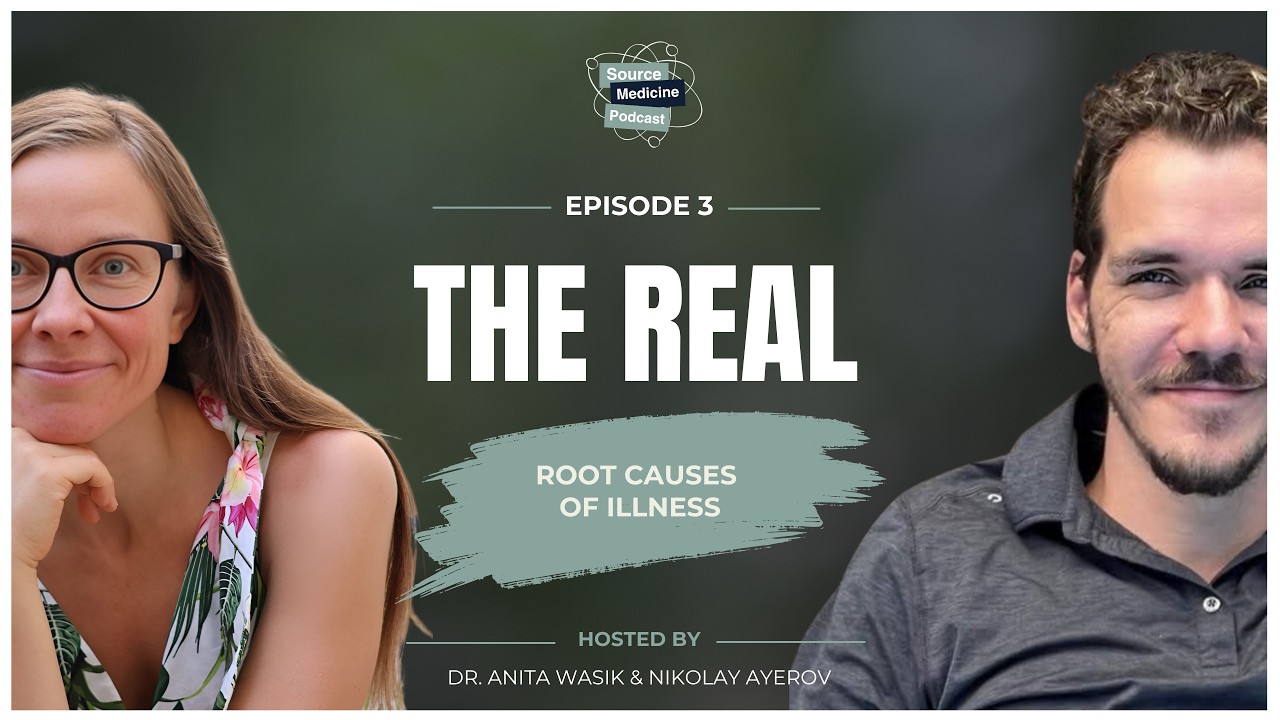
Episode 03
What If Your Symptoms Are Trying to Tell You Something?
A careful look at symptoms as messengers, not to romanticize discomfort, but to ask what the body might be communicating before we rush to silence it.
1h 19m
Summary
Modern medicine is very good at naming symptoms and often less curious about listening to them. This conversation holds both truths and asks a slower question: what if a symptom is not only a problem to be solved, but also information a living system is offering about its conditions?
We move carefully. Some symptoms need urgent intervention, and this is not an argument against care. It is an argument for context, for treating pain, fatigue, or dysregulation as signals from a body in relationship with its environment, its history, and its meaning.
By the end, symptoms begin to look less like enemies and more like early language, a way the body speaks before it has to shout.
"A symptom is the body's first attempt at language."
Key Takeaways
- A symptom is often an early sentence, not a final verdict.
- Suppressing signal without listening tends to raise the volume later.
- Context, biology, history, relationships, shapes how symptoms form and resolve.
- Body literacy is a skill that grows with attention.
- Curiosity is a legitimate clinical stance.
The Origin Point Lens
Living systems communicate in signals long before they communicate in crises. When we treat symptoms only as noise to be silenced, we lose access to the very information the body is offering about the conditions of its life. The Origin Point view is not anti-medicine, it is pro-listening. Health, in this frame, is less about the absence of discomfort and more about the quality of relationship we maintain with our own biology. What a body asks for early is almost always gentler than what it will eventually require.
Continue Exploring
Continue the arc with Episode 4 on the biology of safety, and Episode 5 on nervous system wealth.
Transcript
Related Episodes
More conversations exploring these same patterns will surface here.